






15 September 2026
Florence
"A waiter without a corkscrew is like a soldier going to war without a rifle." We have heard this line repeated so many times in the brigade that by now we recognise it from the tone of voice alone. It belongs to Daniele D'Angelo, our Maître d', and it is the quickest way to understand how he sees his trade: nothing improvised, everything prepared in advance.
Daniele joined Palazzo Castri in March 2017. He already had years behind him as a waiter and bartender, with a specialisation in mixology, but it was here that his path shifted gear. He found a young, dynamic environment, and in time he was promoted to Maître d': for his organisational skills, for his professional competence and — perhaps above all — for his ability to lead a team while keeping the working atmosphere healthy. Along the way he has completed a number of training courses in service, in food & beverage sales techniques, in motivation and in team management. More recently, on his own initiative, he has begun studying to become a sommelier: his passion for wine was already obvious to anyone who had watched him head down to the cellar.
With this we continue our People series, after the portrait of Paola Marini and the invisible art of hospitality. We asked him a few questions.
From the bar to the dining room
How long have you been doing this job?
Practically forever. I started at catering school, and between bars and hotels it has now been twenty-five years.
Was there a moment when you realised the dining room would be your trade?
At the beginning I fell for the bar and for mixed drinks. Restaurant service came later, driven by curiosity about the world of wine and the search for the ideal pairing.
Did anyone teach you something you still carry with you?
I always think fondly of two people. The first is Signor Rossi — I really did call him "Signore", with enormous respect — Restaurant Manager at the Hotel Brunelleschi in Florence, the first to give me a chance in this world. The second is the barman at the Bar Nautico, at the Riva degli Etruschi holiday village. Both taught me organisation, discipline and professional technique, which I now pass on to younger colleagues.
The part of the job guests never see
What does a maître d' do beyond what is visible in the dining room?
Service is only a small part of it. The duties are many: staff training, meetings with management, keeping constantly up to date on developments in food and wine, drawing up wine and drink lists, working with the kitchen, planning shifts and organising the team. But above all it means maintaining a productive, stimulating working environment for colleagues, so that they grow.
How do you prepare a dining room before service?
Organisation is everything: the room has to be tidy and clean. You divide the stations, and then you go down into the detail.
- Tablecloths pressed perfectly, with the centre crease pointing towards the entrance
- Napkins folded simply and elegantly
- Cutlery polished
- And above all the glassware crystal clear, immaculate
How do you read a table?
The first impression is crucial: with a little attention you sense a great deal early on. One thing worth watching is who, among the guests at the table, takes the initiative — in choosing the table, in choosing the wine. That guest is your passepartout for understanding the occasion.
And when something goes wrong?
You stay calm. Cool head, never let anxiety show, with elegance of movement and of proxemics. As if we were actors and the dining room our stage.
The dining room, the garden, the kitchen
What is the difference between serving indoors and serving in the garden?
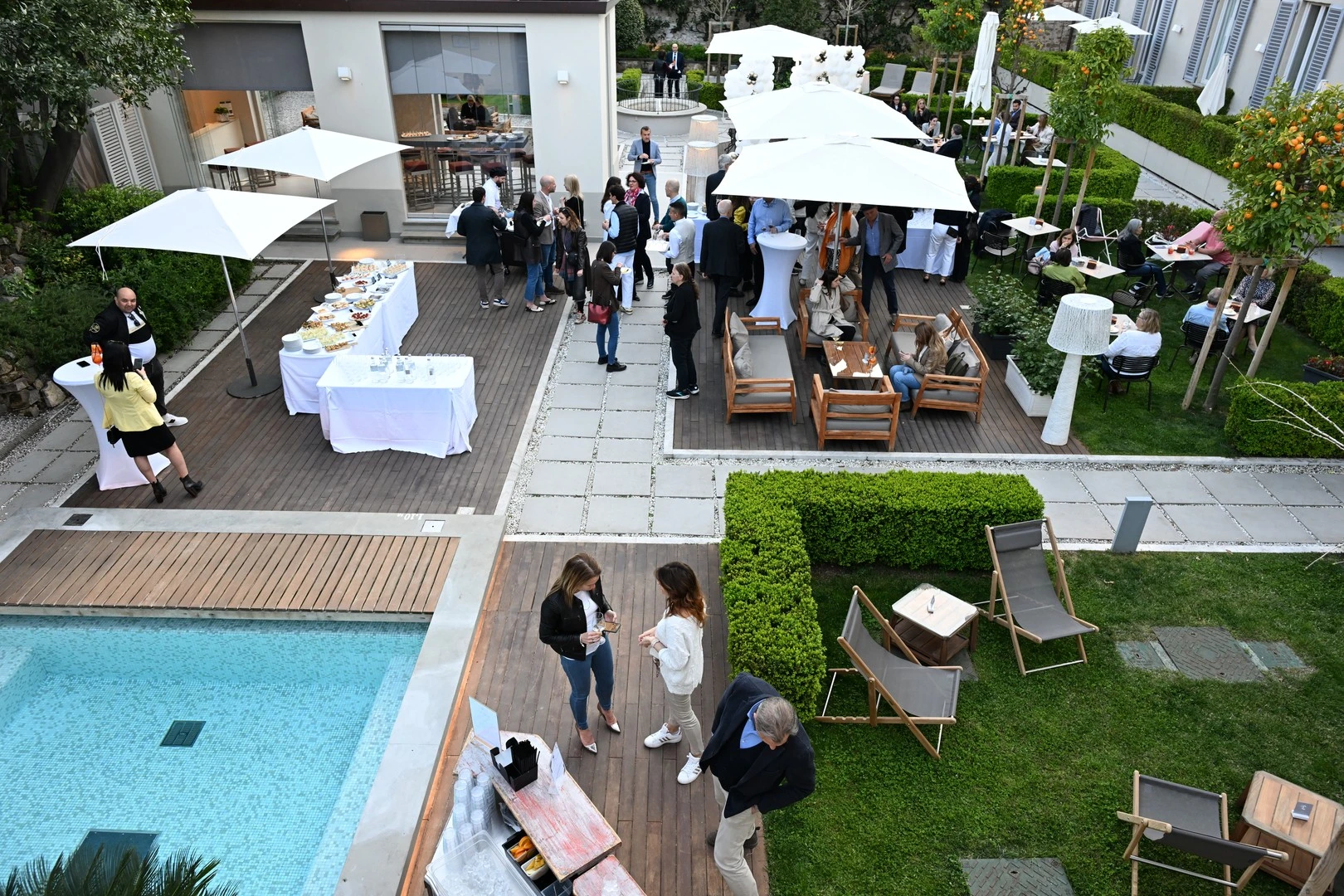
The dining room calls for elegance and discretion. The garden is more dynamic, smarter, lighter.
What kind of guest comes to you?
Mainly an international clientele, intrigued by our history and our culture. I always try to suggest products from our own region.
A favourite moment of the day?
Aperitivo and dinner, definitely. With the aperitivo I can enjoy myself with the mixing; at dinner, with the food and wine pairing.
How do you build an understanding with the kitchen?
Between the dining room and the kitchen it is always love and hate. Differences aside, I think the greatest satisfaction for both departments comes from big events that go well. That is where the understanding is built: in the big occasions, when the two sides work as a single entity, with a single goal.
The episodes that stay with you
An episode you remember fondly.
Guests who come back after years and greet you warmly: it means you left a mark. And I remember the first wine tasting I led — demanding, because I was taking on something new, but enjoyable at the same time.
A mistake that taught you something.
Trying to solve a difficult situation on your own. In this job it isn't possible.
The most unusual request you have ever had.
Playing a part in a marriage proposal: I had to pop a bottle of sparkling wine the moment she said yes. Fairly awkward. It went well.
A guest who stayed with you.
Yes. A guest who, after a long stay for medical treatment, thanked me and said that at the dinners where I served her she had felt part of the family.
His own view
What does hospitality mean to you?
Creating a calm environment, where a person feels at ease and never has to feel awkward.
Is there a cliché about your job that bothers you?
Yes: that anyone can be a waiter, you just carry the plates. In reality it takes a great deal — languages, product knowledge across both food and beverage — and not least the soft skills: empathy, effective communication, teamwork, problem solving.
Advice for someone starting out.
Be curious. Ask questions.
If a guest has only one evening in Florence?
Go up to Piazzale Michelangelo. From there you can take in all the beauty of Florence.
Where to find him
You will meet Daniele at the bar and in the dining room at the Florentia Cafè & Restaurant, our restaurant looking onto the garden. If wine interests you, ask him for a recommendation: it is the conversation he does best, and for anyone who wants to go further we also offer dedicated tasting packages. The corkscrew, incidentally, is always in his pocket.
To book a table or plan an evening with us, write to us: and if you would like to see how the rest of the machine works, we have described a typical day for our staff.