






20 August 2026
Florence
No visit to Florence can be complete without a stop at its best-known and most recognizable church, that Cathedral of Santa Maria del Fiore that has inspired poets, painters, singers and any illustrious minds over the centuries, thus contributing to its architectural, religious and emotional importance.
Rising on the ruins of the Church of Santa Reparata (some remains can still be seen in the crypt), it is an imposing Gothic-style structure built from the late 13th century by Arnolfo di Cambio, only to be completed in the 15th century with the addition of Filippo Brunelleschi's famous dome.
There are numerous elements of decoration that deserve close observation. Let us try to discern some of them together!
The facade
Not everyone knows that the church's facade, a recurring element in postcards and pictures taken with smartphones, was completely rebuilt in the 19th century. Covered in pink, white and green marble, it is surely the structure's best-known calling card, almost in contrast to a more sober interior... but only in appearance.
Incidentally, Arnolfo's original design was considerably different from the present structure of the church: a careful eye will be able to notice that the first four windows on the sides of the building are lower, narrower and closer together than those on the east side, which in fact correspond to the enlargement made later by Francesco Talenti.
The mosaics
As we have already mentioned, Florence Cathedral presents itself to visitors' eyes with an exceptional exterior decoration that seems to anticipate an equally opulent interior.
However, as soon as one crosses the threshold of this beautiful ecclesiastical edifice one realizes that the reality is very different: the interiors are much less ornate and rich than the exteriors. Nonetheless, every corner of the cathedral deserves careful scrutiny, starting with the delightfully detailed mosaic floors.
One of the reasons why there is such a stylistic difference between the various portions of the Cathedral is also related to the fact that its construction took a long time and that several radical works were carried out even centuries after the original plans, thus making the overlapping of architectural styles that have followed one another over the course of time very evident.
The clock
In the first part of the Duomo, one of the sights that captures the greatest curiosity of tourists is definitely the 1443 clock created by Paolo Uccello with frescoes of the four prophets. The main peculiarity of the clock is that it is one of the few in the world that still shows the 24 hours of the Italic day, the end of which coincided with sunset.
The dome
Built by Brunelleschi, the dome is extraordinarily fascinating outside and ... inside: in fact, the interior was frescoed by Giorgio Vasari, who began depicting an unforgettable Last Judgment concluded only in 1579 by his pupil, Federico Zuccari.
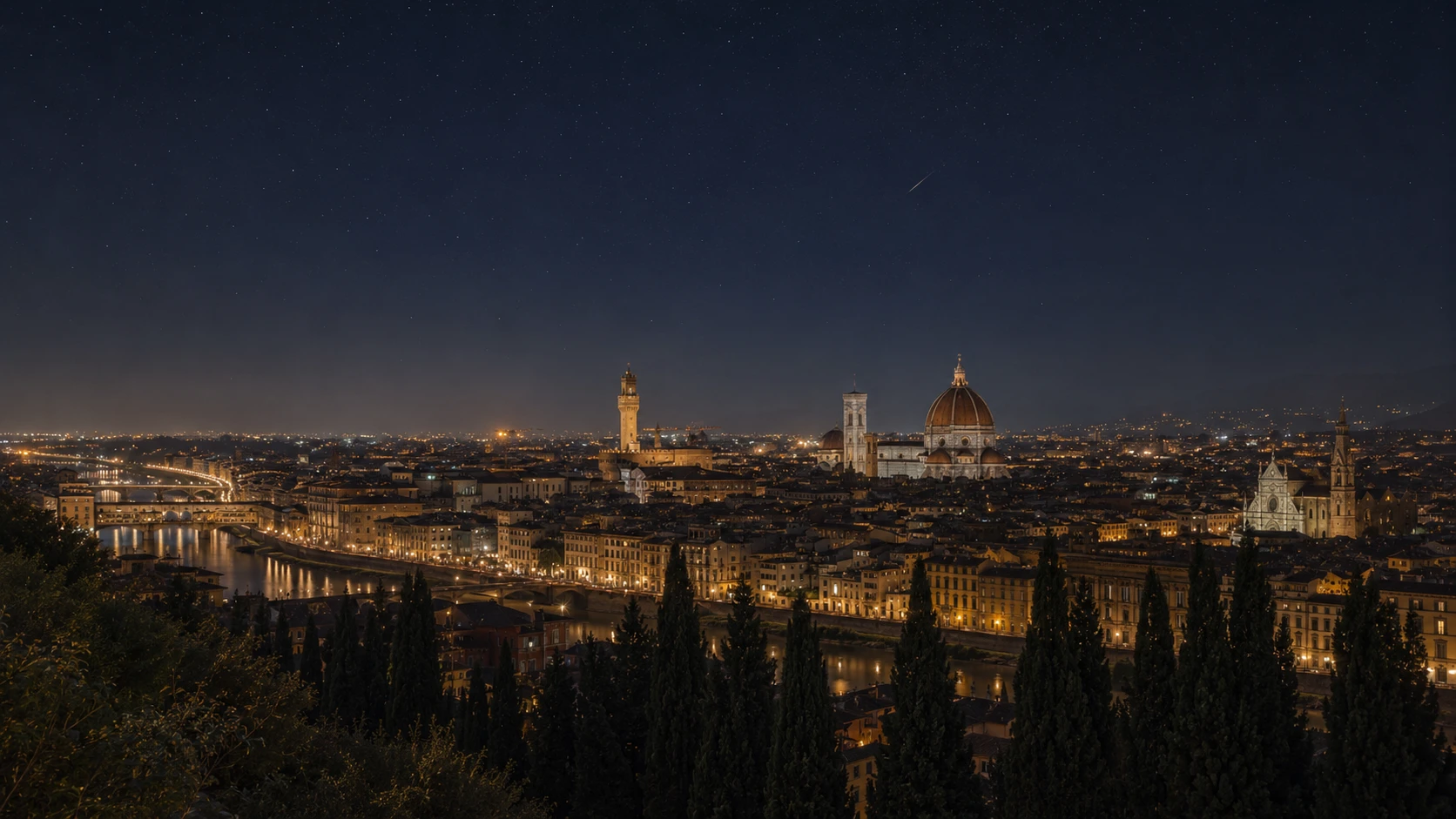
As for Brunelleschi's design, its majesty is such that it was unanimously elected as a symbol of Florence and the entire Renaissance. With a diameter of 45.5 meters and a height of 116 meters, the Dome is clearly visible from every corner of the city and is enriched by an oculus surmounted by a large lantern, a 21-meter white marble tower made after Brunelleschi's death, at the apex of which is a gilt copper ball with a cross, by Verrocchio.