






20 August 2026
Florence
What does “beauty” mean? How does its meaning change? What defines it?
Nowadays beauty is synonymous with health, appropriate levels of exercise, and little touches to keep oneself “young” and full of life. That is essentially what it means today. Compared with the past, say the 14th century, our average lifespan has considerably increased. Then there was no such thing as growing older.
We became fascinated by the paintings of women in the Uffizi Gallery in Florence, where the art of beauty has been frozen in time. It make us wonder how beauty has been perceived over the centuries. How did women used to make themselves look beautiful?
Beauty is in the eye (of the beholder)
A generously proportioned body, with curvaceous thighs, large round blue eyes, a softly curved nose, curly blonde hair, a small mouth, dark arched eyebrows or plucked and hand painted eyebrows to emphasise the forehead, white teeth and skin to be seductive and look healthy. This was considered the height of beauty in the 16th and 17th centuries. At the time women who painted their eyelids with blue or green clay were considered to be bold.
Of course women used make-up then too. It was difficult to be beautiful without giving nature a helping hand, and so eyebrows were drawn on with a black pencil, and cheeks were often highlighted in red to conceal blemishes and look “healthy”. This led to people painting their faces, and some ladies, and indeed gentlemen, employed painters to make up their faces. They used rouge and powder, and in some cases even oil paints to highlight facial features. The results were as spectacular as those we obtain with photoshop today, but not so good for the skin.
Beauty routines
One of the most famous and well-known historical treatises on beauty is the De Ornatu Mulierum, which means “The Harmony of Women”, today available as an e-book. It gives hints and tips for women to present themselves at their best, targeting women of marriageable age, both before and after marriage. The book was written by the first female doctor of the Salerno School Trotula De Ruggiero under the pseudonym Trotula Minor (at the time women were not permitted to write books, not even on beauty).
Her essential teaching was to keep skin healthy by means of saunas, face masks and natural remedies. These included herbal preparations to conceal eye bags, freckles and blemishes, to eliminate bad breath, to dye the hair, to avoid chapped lips and bleeding, but also “ut virgo putetur que corrupta fuit”, or how to regain one’s virginity using herbs. Beauty care has never been a frivolous subject. It has always been linked to the concept of nature from which art takes it inspiration: a healthy body is by definition in harmony with the universe. The medicinal herbs Trotula mentions are still to be found in the best herbalists, and naturally can be found here in Florence, which has an uninterrupted tradition of herbal medicine.
Useful advice for a lady preparing to go to court
For pure white skin: start a few days, or preferably the week before the date to collect “lattovari”: dense, syrupy pharmaceutical preparations made up of active ingredients missed with honey or melasses to drink or be used as a paste or enema. The key is purification. Drink Acquelanfa o water floured with orange flowers morning and night.
For more radical hair removal the writer Boccaccio recommended using the arts of “certain women” who “skin women, removing their eyebrows and forehead hair, rubbing glass on their cheeks and smoothing wrinkles on their neck, and removing certain hairs”, making them hair-free, but also, we fear, irritating their skin terribly. On the other hand, the beauticians of the time also used “well-ground and sieved dehydrated lime placed in a clay pot and boiled and cooked into a pulp”. To prove that the preparation was ready to remove the young women’s hair, you would “Take a feather, place it in the unguent, and if the feather comes out bare, it is ready. Otherwise it is not”.
The importance of blonde hair. To bleach their hair, ladies would use various types of headdress, known as “solane”, which were open on the head so that their hair was exposed to the sun, with a large fold to protect the face from the sun and ensure it stayed white, so they did not look like women who worked in the fields.
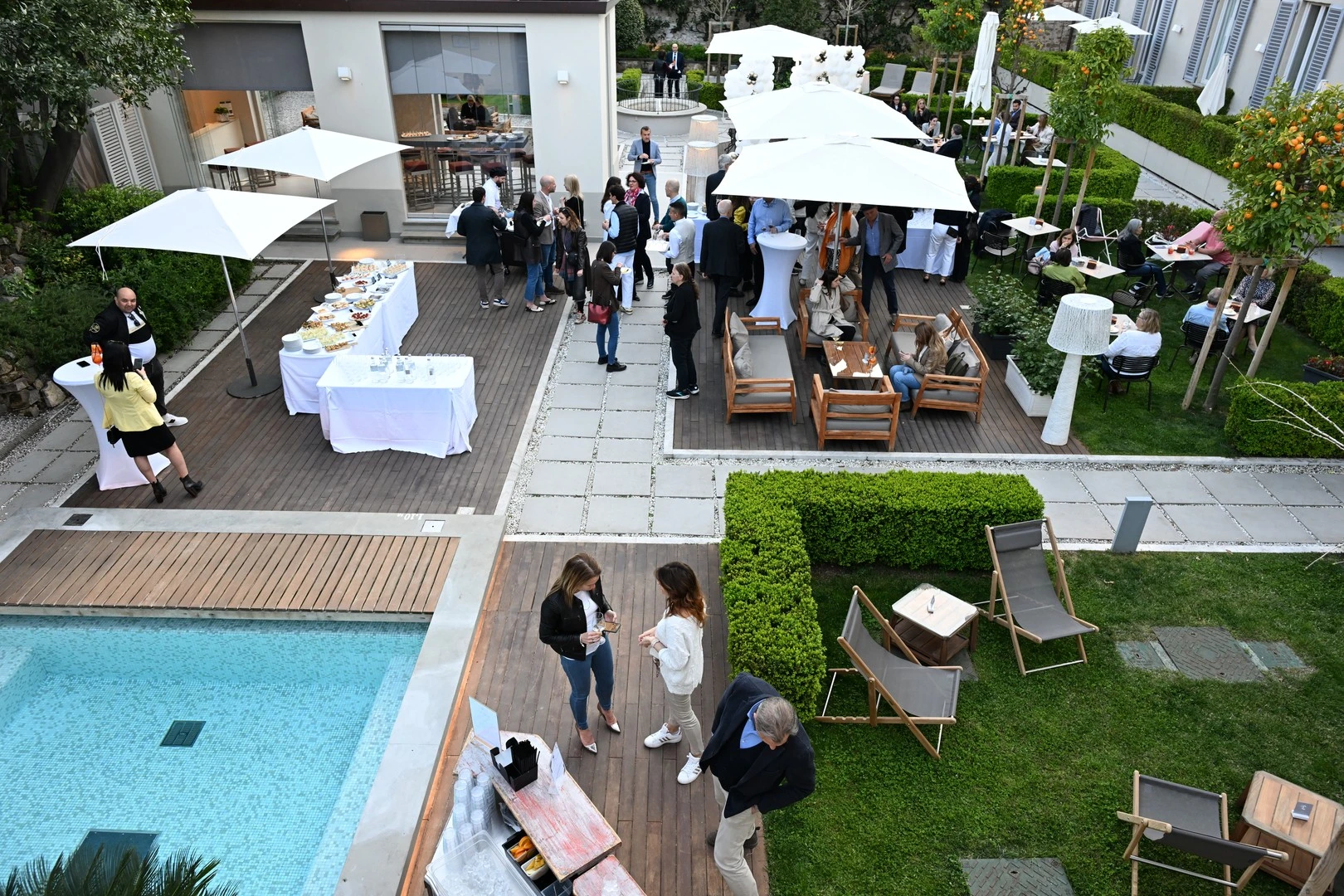
Nowadays the concept of beauty changes rapidly as new fashions and trends emerge. As well as cosmetics we have plastic surgery. Real images are flanked by virtual images. If your beauty routine has become exhausting, take a relaxing holiday! Palazzo Castri is the epitome of beauty, with its beautifully designed rooms, warm welcome and excellent cuisine. You can stay in tip-top form at our wellness centre which also offers high-end Maria Galland face and body treatments.