





20 August 2026
Florence
Palazzo Castri is pleased to host a selection of works by the surrealist-flavored graphic muralist, HNRX, thanks to a collaboration with Street Levels Gallery, the first Urban Art gallery on Florence.
Street Levels Gallery, is configured as an articulated environment committed to the investigation of the interaction between the street, the public and the exhibition space; a reality dedicated to the development of urban artistic experimentation.
Animated by the intent to narrate and support artistic expressions born in the street, Street Levels Gallery plays the role of mediator between the street and the exhibition site, engaging local and international artists to give space to new voices in street art.
HNRX is an Austrian artist with ties to Germany; in fact, his works often bear the names of his "two hometowns"-Innsbruck and Hamburg; sometimes even accompanied by geographic coordinates.
His training as a muralist always leads him to seek contact with the outdoors and the urban, then his travels become long train trips during which he studies the landscape, then deconstructs and processes it.
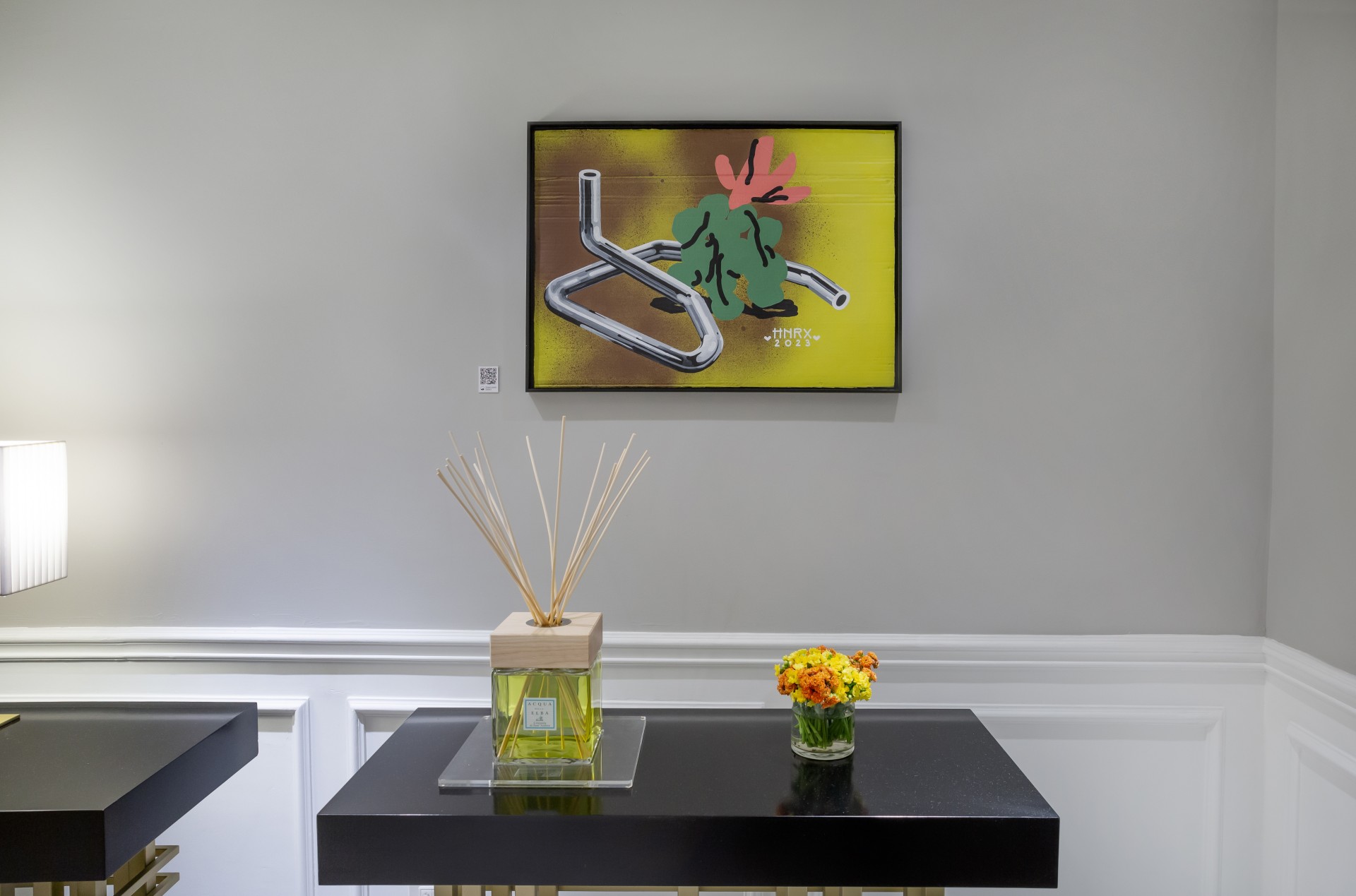
HNRX's work is varied and complex; there is certainly in his canvases still the process of deconstructing the landscape, but it focuses this time on the background: the patches of color become graphicisms and the canvas a veritable poster on which stand out pieces of letters, recomposed, appears the inscription "Silly Objects" that gives the series its title.
"Silly" defines these subjects as "silly," but it mostly refers to a physical quality, that of being moldable and playful.
In fact, HNRX focuses on these object-subjects camping on the canvas, makes them recognizable enough to identify them as everyday objects, and then subjects them to a soft fusion that makes them gently lean against each other, creating unreal and fantastic still lifes.
Telephones, pipes, forks and vegetables of all kinds become the characters of a surreal universe, graphic but colorful, soft but meaningful.
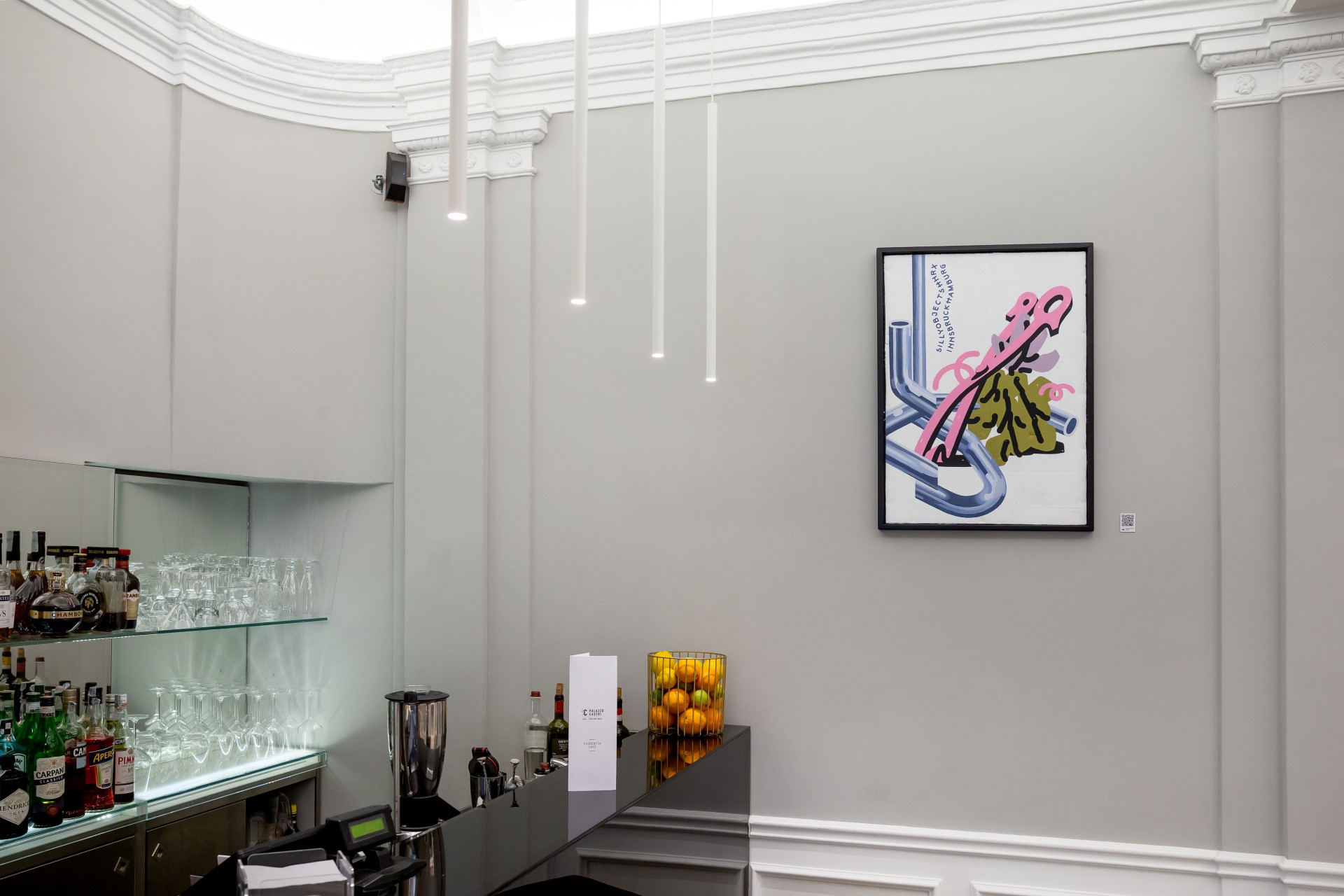
HNRX's surrealism is embodied in a universe without rules except those of graphic design and poster printing, where color is a vehicle for a story: the artist's long creative process.
HNRX does not offer us precise or identifiable messages; his works evoke the artist's process and the introspection that enables creation, from primary deconstruction to new semantic genesis through patches of color.
It is also interesting to note how HNRX contributed to the development of the art movement known as Post-Graffiti.
When we speak of this movement we generally refer to the substantial change in locations, techniques, and subjects encountered: from painting in the street to the establishment of the gallery, from the purest Writing to a predilection for drawing and painting, and even more, a greater tension of urban art toward abstraction.
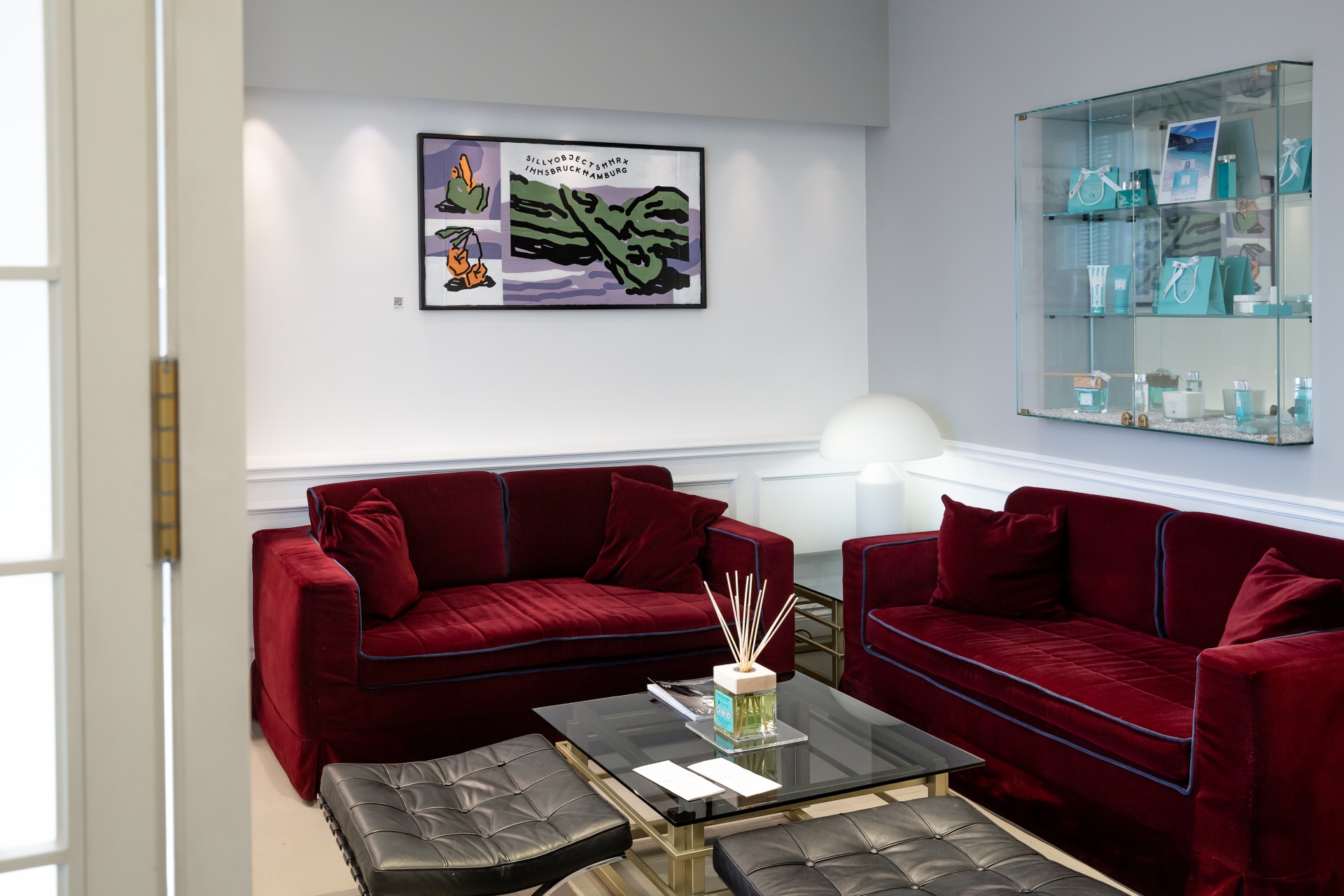
HNRX is the perfect artist to make use of the term Post-Graffiti since, even being a well-known muralist, he frequently works on his full-bodied series in the studio; moreover, his subjects and backgrounds are subjected to a maximum degree of deconstructive abstraction that makes them barely recognizable, despite their apparent everydayness.
Also striking is the multifaceted use of acrylic and spray can: the two techniques do not cancel each other out but coexist in this surreal and colorful universe.
Additionally, these works do not take the form of customary canvases; in fact, the support for the painting is simple cardboard.
HNRX thus succeeds in evoking the immateriality typical of the expressive practice of painting walls through the use of a humble medium subject to the passage of time.
The works offered here provide a glimpse of an example of the new creative frontiers reached by the vibrant international Urban Art movement.
The collaboration between Street Levels Gallery and Palazzo Castri is an example of how different cultural realities can blend harmoniously to create something new and exciting.